BREAKING NEWS! Supreme Court agrees to hear Trump’s restriction of birthright citizenship

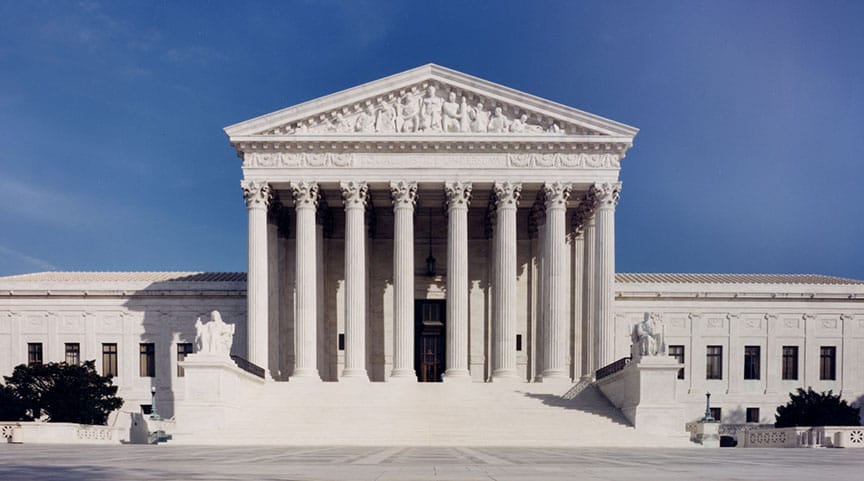
Amy Howe for SCOTUS blog details the Supreme Court's granting review of the merits of President Trump's executive order restricting birthright citizenship. Today, the Supreme Court granted the Trump administration’s petition for review in Barbara v. Trump. In that case, a federal district court issued a preliminary injunction that barred the Trump administration from enforcing the executive order against a class of babies born on or after February 20, 2025, who are or would be denied U.S. citizenship by the order.
Earlier this year, in a case in which lower courts had issued nationwide, or universal, injunctions barring implementation of the executive order, the Court held in Trump v. CASA, Inc. that the federal district courts generally lacked the power to issue nationwide injunctions. The Court seemed to allow for class-wide injunctive relief that would operate similarly to a nationwide injunction. A class would need to be certified under Federal Rule of Civil Procedure 23. That is the path pursued by the district court in the Barbara v. Trump.
Howe offers some useful background about birthright citizenship:
"The United States is one of roughly 30 countries, including Canada and Mexico, that offer automatic citizenship to nearly everyone born there. Birthright citizenship was added to the Constitution in 1868 when the 14th Amendment was adopted following the Civil War. The section of that amendment known as the citizenship clause provides that `[a]ll persons born or naturalized in the United States, and subject to the jurisdiction thereof, are citizens of the United States and of the State wherein they reside.' The amendment was intended to overrule one of the Supreme Court’s most notorious decisions, its 1857 ruling in Dred Scott v. Sandford, holding that a Black person whose ancestors were brought to the United States and enslaved was not entitled to any protection from the federal courts because he was not a U.S. citizen." (bold added).