Civil liberties advocates told us they had never seen the warning notice before and expressed concern that it was a tool to intimidate critics from speaking out.
As we were preparing to publish our digital story, I checked in with Gonyea again and learned that since we last spoke, she had heard from someone else, who said that the same agents had tried to reach him and had left the same form to sign.
She shared his name, David Streever.
I reached him within a few minutes. Streever at that point was on a train back to his home in Rochester, N.Y., after landing the night before at John F. Kennedy International Airport.
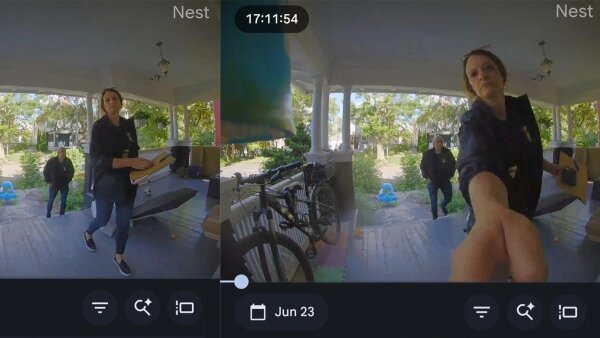
I learned he had been in Finland taking his daughter to a theme park when he noticed his doorbell camera had captured footage of what looked like two law enforcement officers on his front porch on June 23. He later learned from his wife, the Rev. Hilary Streever, that the officers were Homeland Security Investigations agents looking to talk with him about an email he had sent Todd Lyons, the former acting director of ICE.
Streever had written Lyons a scathing note in late January after federal immigration officers had fatally shot two Americans. The email compared Lyons to a Nazi and warned he would be tormented by his conscience.
Streever’s wife told the agents that he was out of the country and would be home on June 26.
The agents left her with a warning notice for Streever to sign. It was the same notice Gonyea had received. It said the email to Lyons may have violated the law.
Streever and his daughter landed at JFK airport on the evening of June 25 and went to a nearby airport hotel to sleep. That night, Streever received a call from the hotel front desk letting him know that an agent from the Department of Homeland Security had come looking for him. He then noticed he had voicemails from two callers who said they were calling from HSI. The next morning, the front desk gave him the agent’s business card, which matched the number that had called his cell phone. It is unknown how the agent tracked him to the hotel.
I consulted with my editors about whether we should try to include Streever’s story in our story about the agents visiting Gonyea.
We decided to take more time and pursue a standalone story about Streever. I spoke with Streever on June 28, and he showed me documentation to corroborate his account, including the notice. I continued reporting over the next two days.
DHS gave us the following comment when we asked about Streever’s account: "ICE investigates all credible threats towards its employees and officers, including threats to the ICE Director. As a matter of policy, we do not comment on any ongoing investigations."
On July 1, we published our story, and a radio version aired on Morning Edition.
Then, on Monday, the nonprofit free speech group the Foundation for Individual Rights and Expression (FIRE) filed a federal lawsuit on Streever’s behalf against DHS officials and the agents who contacted him. The lawsuit says DHS violated his First Amendment rights by tracking him down and pursuing him over protected speech.
"Our Constitution does not tolerate such a brazen abuse of authority," the lawsuit reads.
The suit also seeks to get a court finding that the warning notices given to Gonyea and Streever chill speech.
DHS responded to the lawsuit with a statement that read in part, "Any allegation DHS and its components are attempting to 'squash' free speech is categorically FALSE.”
We will keep following Streever’s story, and how free speech advocates are responding to the administration’s efforts to crack down on ICE critics. |
|