The Supreme Court Will Reject President Trump's Effort to Restrict the Constitutional Rule of Birthright Citizenship

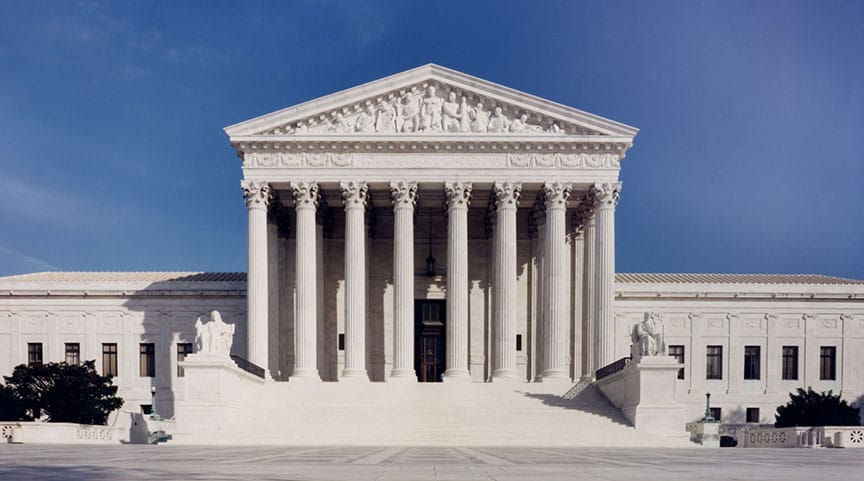
In Trump v. Barbara, the U.S. Supreme Court has granted review of a lower court holding that President Trump’s executive order restricting birthright citizenship is unconstitutional. In my estimation, the Court will abide by the Constitution and reject the Trump administration’s challenge to the long-settled rule of birthright citizenship.
The Fourteenth Amendment of the U.S. Constitution provides that “[a]ll persons born or naturalized in the United States, and subject to the jurisdiction thereof, are citizens of the United States . . . .” (emphasis added). The language “subject to the jurisdiction” historically has been understood to deny birthright citizenship to the children of foreign diplomats, who are generally immune from U.S. laws for conduct on U.S. territory. With one narrow exception, birth in the United States thus bestows U.S. citizenship. Many other nations, including Canada, also recognize birthright citizenship.
The Citizenship Clause rejected the Supreme Court’s decision in Dred Scott v. Sandford (1857), which denied U.S. citizenship to freed African American slaves. In 1898, the Supreme Court in United States v. Wong Kim Ark held that the Clause “affirms the ancient and fundamental rule of citizenship by birth within the territory” and rejected the U.S. government’s argument that a person born in the United States was not a citizen because his parents were citizens of China.
President Trump has criticized birthright citizenship and attacked “anchor babies,” his derogatory term for U.S. citizen children born to undocumented immigrants. On the first day of his second term, he issued an executive order entitled Protecting the Meaning and Value of American Citizenship. The order purports to deny citizenship to persons born in the United States to an undocumented mother or mother lawfully in the U.S. on temporary (student, tourist, business, etc.) visas, unless the father is a U.S. citizen.
Three lower courts granted nationwide injunctions barring the President from restricting birthright citizenship. In Trump v. CASA, Inc., the Supreme Court in June restricted the power of the federal courts to issue injunctions that applied across the nation. In the opinions in the case, not a single Justice discussed the constitutionality of the executive order limiting birthright citizenship. No Justice suggested that birthright citizenship could be restricted in whole or in part by executive order.
The Court left open the possibility that class actions seeking group wide relief for a class of persons could be brought to secure relief similar to a nationwide injunction. A district court can issue an injunction that applies to every member of a class properly certified under federal rules. After the CASA decision, a court certified a class in one of the birthright citizenship cases and entered a class-wide injunction barring implementation of the birthright citizenship executive order. The Supreme Court granted review in Trump v. Barbara, which will allow the Court to decide the merits of the legal challenge to President Trump’s birthright citizenship executive order.
There is room for optimism. The Supreme Court has followed settled law in other challenges to President Trump’s immigration policies. For example, the Court to this point has barred summary removals of noncitizens without a hearing that President Trump has sought under the Alien Enemies Act of 1798.
The Court under the leadership of Chief Justice John Roberts should follow the rule of law and find that the Trump administration’s effort to restrict by fiat the Citizenship Clause of the 14th Amendment is unconstitutional.