Bilateral Treaties


The UK and Poland have entered a new bilateral treaty. While much of the treaty is focused on national security and defense, there are also provisions regarding migration.
Article 3 (National Security Co-operation), paragraph 3 reads:
he Parties recognise that migrant smuggling is a shared challenge requiring joint solutions. They commit to cooperate in the fight against organised cross-border crime involving migrant smuggling and trafficking in persons. They shall, where appropriate, deepen dialogue and operational co-operation on border security and exchange best practice and shall work together to counter the instrumentalisation of migration by external actors.
Article 3, paragraph 4 reads:
The Parties commit to deepening comprehensive partnerships with countries of origin and transit to address the upstream drivers of irregular migration. The Parties recognise the importance of safe, regulated migration and asylum systems that safeguard against abuse and can respond to modern challenges, and share a firm commitment to international law and human rights standards.
Finally, Article 3 paragraph 10 reads:
The Parties reinforce their existing commitment to exchange information extracted from criminal records, focusing on both the support of criminal proceedings and the pursuit of key public protection objectives including employment vetting, conducting criminal records checks within migration procedures, and safeguarding. Specifically, the Parties shall share criminal records information for the purposes of protecting vulnerable adults and children including fostering and adoption arrangements where appropriate.
The UK-Poland agreement is interesting on its own. Politico notes that the agreement comes at a time when bilateral agreements are on the rise:
Of the 169 multilateral defense deals signed by EU countries, the U.K. and Ukraine since 2014, 135 were signed after Moscow’s all-out war began in 2022, with 36 signed in 2025 alone.
The outlet sees the trend as action to reinforce NATO obligations and relationships.
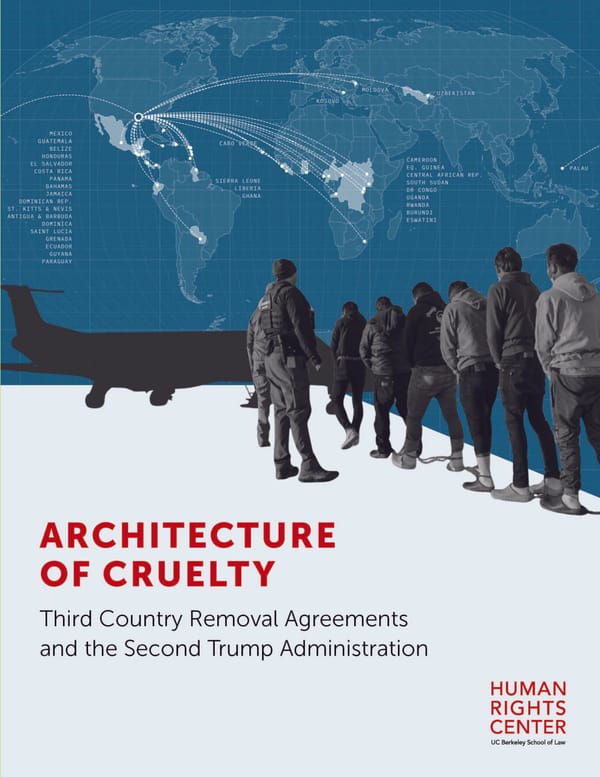
Interestingly, the US has also been trending toward bilateral agreements. I've been reading up on the Asylum Cooperation Agreements (ACAs) that the US has entered into with Belize, Cabo Verde, Ecuador, Guatemala, Honduras, Liberia, Paraguay, and Uganda. The ACAs are bilateral agreements that allow the US to send asylum applicants from the US to one of these countries where the applicant can seek protection under that country's laws. And, of course, there are also the bilateral agreements between the US and countries regarding the acceptance of deportees.
I'm not an international scholar but it strikes me that there's an article lurking in here--the movement away from group action (e.g. NATO, UN) to one-on-one agreements.