Breaking News! Supreme Court Strikes Down Birthright Citizenship Executive Order

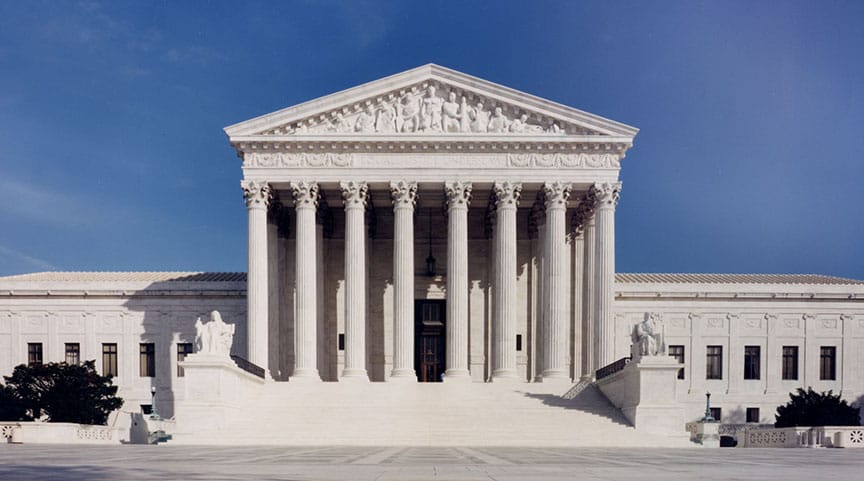
Promising to be a blockbuster from the outset, Trump v. Barbara generated the most public attention of any immigration case in decades. E.g., here; here; here; here; here. The Court addressed whether the President's Executive Order denying birthright citizenship to the children of undocumented immigrants conflicts with the Citizenship Clause of the 14th Amendment ("All persons born or naturalized in the United States, and subject to the jurisdiction thereof, are citizens of the United States and of the State wherein they reside.") and 8 U.S.C. § 1401(a) ("The following shall be . . . citizens of the United States at birth: (a) a person born in the United States, and subject to the jurisdiction thereof").
Last year, the Court in Trump v. CASA, Inc. ruled that district courts lacked congressional authorization to issue nationwide injunctions barring implementation of the birthright citizenship executive order. The Court did not address the President's effort to restrict birthright citizenship. The delay in deciding the merits increased the suspense and, for me, worry about the outcome.
A President of many firsts, President Trump became the first sitting president to attend an oral argument of the Supreme Court. He left after hearing the argument of the Solicitor General. President Trump wrote on social media that “[a] negative ruling on Birthright Citizenship, on top of the recent Supreme Court tariff catastrophe, is not Economically sustainable for the United States of America.”
After oral argument, observers predicted that a majority of justices would strike down the Executive Order. The Immigration Professors blog published a symposium analyzing the oral arguments.
In an opinion by Chief Justice John Roberts decided on the last day of the 2025 Term, the Court held that the Executive order was unconstitutional. The breakdown of the Justices was a bit complicated. The Chief wrote for the Court and was joined by Justices Sotomayor, Kagan, Barrett, and Jackson. Justice Jackson filed a concurring opinion, in which Justice Sotomayor, joined as to the introduction and Part I. Justice Kavanaugh filed an opinion concurring in the judgment and dissenting in part. He concluded that the executive order violated the immigration statute but not the Fourteenth Amendment. Justice Thomas filed a very lengthy (90+ page) dissenting opinion, in which Justice Gorsuch joined. Justices Alito and Gorsuch filed dissenting opinions.
Amy Howe for SCOTUSBlog summarizes the main opinions.