From the Bookshelves: Asylum, Refugees, and Other Humanitarian Protections

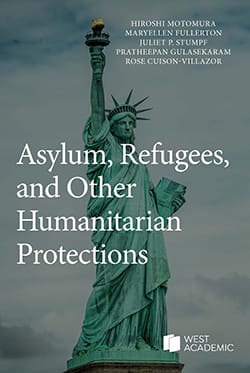
Asylum, Refugees, and Other Humanitarian Protections
Hiroshi Motomura | Maryellen Fullerton | Juliet P. Stumpf | Pratheepan Gulasekaram | Rose Cuison-Villazor
Publisher's Description
Asylum, Refugees, and Other Humanitarian Protections is a successor casebook to Forced Migration: Law and Policy, 2nd Edition. Its content is identical to Chapter Six of the comprehensive casebook, Immigration and Citizenship: Process and Policy (Tenth Edition 2026). This short volume is offered for courses on asylum and refugees, or on forced migration and humanitarian protections more generally. As with Forced Migration, coverage includes the international framework for protection, refugee admissions, Temporary Protected Status and parole, the substantive doctrine for asylum, the process for claiming asylum (including the detention of asylum seekers), and protection under the Convention Against Torture. The materials on temporary protection are fuller and more central, reflecting their growing importance in law and policy. This casebook is deliberately slim, providing core materials but leaving room for instructors to add supplemental materials that draw uniquely on their expertise.
West Academic Publishing
American Casebook Series
06/10/2026