TRAC Immigration: As Denaturalization Lawsuits Surge, Their Basis Lacks Transparency


From TRAC Immigration: "Denaturalization remains an ongoing Department of Justice (DoJ) civil enforcement priority. In July 2026 at least 50 denaturalization complaints were filed in that single month, an all-time high. This brought the total during the first seven months of 2026 to at least 105 denaturalization suits filed this year.[1] Yet despite this surge in denaturalization suits, the government has released very little information about the underlying basis for these suits and current rules prevent public access to almost all of these court filings."
Table 1. Civil Denaturalization Lawsuits Filed by State in Federal District Courts Seeking to Revoke the U.S. Citizenship of Individuals, January 2008 to July 2026
| State | 2008-2025 | 2026 | Total | |
|---|---|---|---|---|
| January - June | July | |||
| Alaska | - | - | 1 | 1 |
| Arizona | - | - | 2 | 2 |
| Arkansas | - | - | 1 | 1 |
| California | 21 | 3 | 2 | 26 |
| Colorado | 3 | 1 | - | 4 |
| Connecticut | 1 | 2 | - | 3 |
| Delaware | - | 1 | 2 | 3 |
| District of Columbia | 8 | 1 | - | 9 |
| Florida | 30 | 10 | 9 | 49 |
| Georgia | 6 | 4 | 3 | 13 |
| Illinois | - | 2 | - | 2 |
| Indiana | 1 | - | - | 1 |
| Iowa | 3 | 2 | - | 5 |
| Kansas | 7 | 1 | - | 8 |
| Kentucky | 1 | - | - | 1 |
| Maryland | - | 4 | 6 | 10 |
| Massachusetts | - | - | 1 | 1 |
| Michigan | - | - | 1 | 1 |
| Minnesota | 5 | 2 | 1 | 8 |
| Mississippi | - | 1 | 1 | 2 |
| Missouri | - | 2 | - | 2 |
| Nevada | - | 1 | - | 1 |
| New Hampshire | 1 | - | 1 | 2 |
| New Jersey | 1 | 1 | 1 | 3 |
| New Mexico | - | - | 1 | 1 |
| New York | 8 | 3 | - | 11 |
| North Carolina | 3 | 3 | 2 | 8 |
| Ohio | 1 | - | 2 | 3 |
| Oklahoma | - | 1 | - | 1 |
| Oregon | 7 | 1 | - | 8 |
| Pennsylvania | - | 4 | 1 | 5 |
| South Carolina | - | - | 1 | 1 |
| Tennessee | - | 1 | 2 | 3 |
| Texas | 6 | 3 | 7 | 16 |
| Utah | 1 | - | 1 | 2 |
| Washington | 6 | - | 1 | 7 |
| Wisconsin | 5 | 1 | - | 6 |
| Total | 125 | 55 | 50 | 230 |
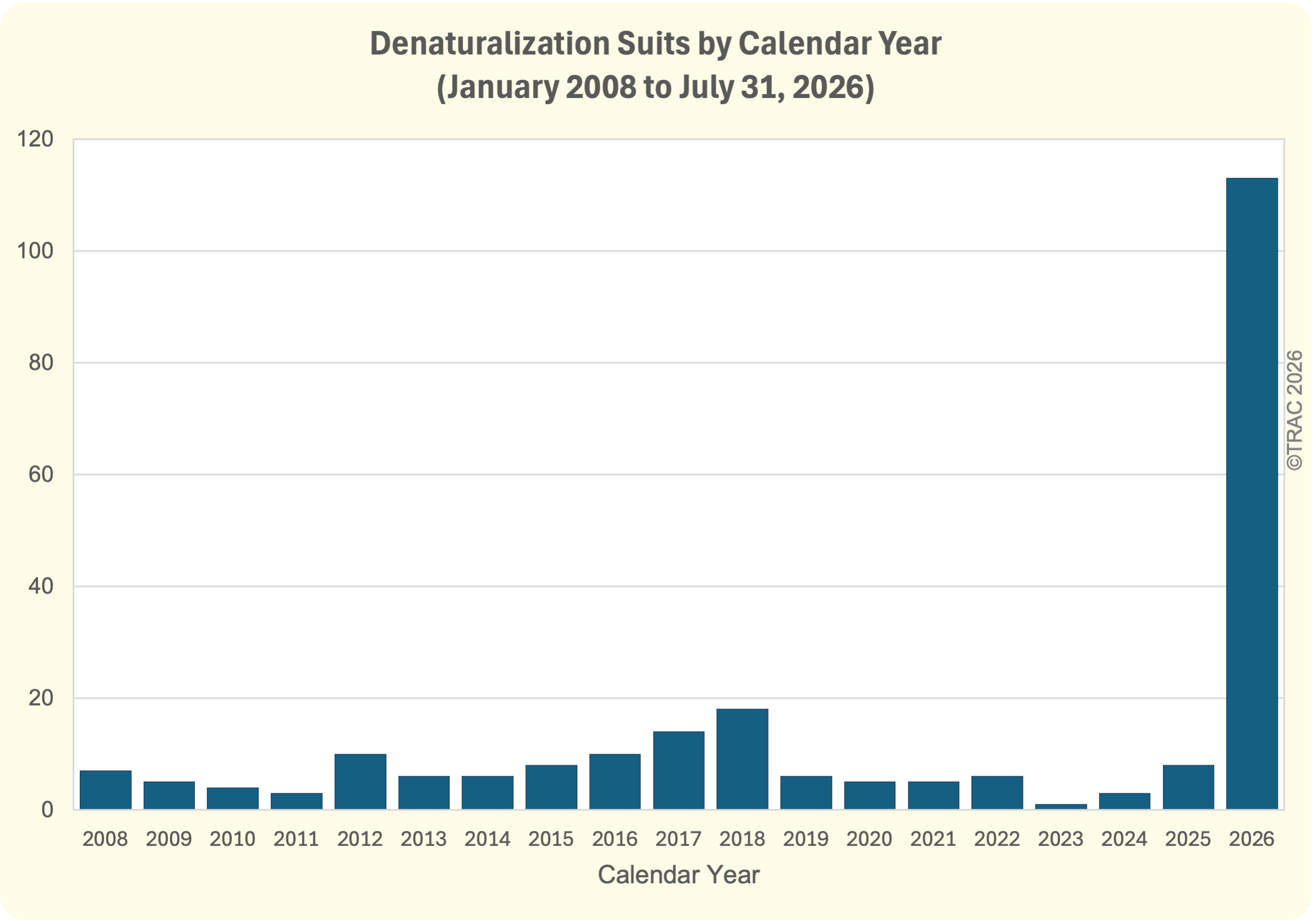
Figure 2. Civil Denaturalization Complaints Filed by Calendar Year in Federal District Courts Seeking to Revoke the U.S. Citizenship of Individuals, January 2008 to July 31, 2026