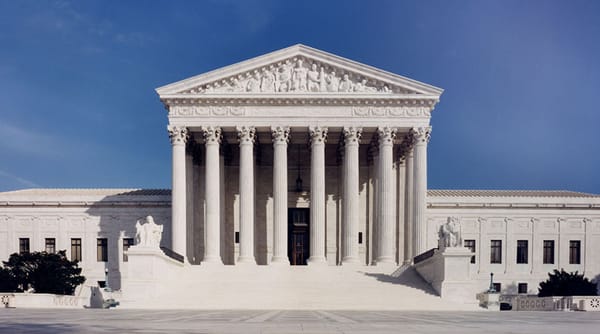
Trump v. Barbara Symposium: The Citizenship Clause is Part of an Anti-Aristocracy Constitution by D. Carolina Núñez


The ImmigrationProf Trump v. Barbara Symposium continues with The Citizenship Clause is Part of an Anti-Aristocracy Constitution by D. Carolina Núñez
The oral arguments in Trump v. Barbara predictably centered on a single phrase in the Fourteenth Amendment’s Citizenship Clause: “subject to the jurisdiction thereof.” This is the only limitation in the Clause’s otherwise universal grant of citizenship to “[a]ll persons born or naturalized in the United States.”[1] The parties presented two competing framings of the phrase. Solicitor General John Sauer, appearing for the government, argued that “subject to the jurisdiction” signaled a break from the nearly universal birthright citizenship of British common law and that U.S.-born children’s citizenship depends on their parents’ status at the time of their birth. Cecillia Wang, representing the respondents, conversely argued that “subject to the jurisdiction” codified the common law’s narrow and closed set of exceptions to territorial birthright citizenship.
Toward the end of the argument, though, Ms. Wang introduced an idea that shifted, however briefly, the focus away from “jurisdiction” (a term that appears 78 times in the transcript) and away from British common law altogether. Justice Kagan asked Ms. Wang to address General Sauer’s argument that the drafters of the Citizenship Clause had not contemplated undocumented immigrants and therefore could not have meant to include their children.[2] Ms. Wang first took issue with General Sauer’s premise, highlighting that the drafters had indeed contemplated individuals much like the undocumented immigrants of today. But then she made an important observation about the Fourteenth Amendment: Its drafters “had an intuition that was consistent with the founding aversion to inherited rights and disabilities.”[3] Unfortunately, the oral argument ended shortly after, and Ms. Wang never had the chance to develop this line of thought.
Ms. Wang concisely captured the impetus behind the Fourteenth Amendment: eliminating a system of racial hierarchy that imposed inherited civic disability on the enslaved and conferred inherited civic privilege on the enslavers.[4] But that is just the tip of the iceberg. As Lucy Williams and I argue in a recently posted working paper, the rejection of inherited civic status is not just a feature of the Fourteenth Amendment—it permeates the Constitution as a whole. The Constitution’s existence itself formalized the colonies’ rejection of English monarchy, aristocracy, and other hereditary-based ruling classes (some of which has persisted under English law until very recently). Moreover, several of the Constitution’s provisions embody specific rejections of inherited civic disability and civic privilege that are particularly relevant to the Fourteenth Amendment and the concept of citizenship more generally. These provisions, we argue, provide important interpretive constraints that foreclose the government’s reading of the Citizenship Clause as excluding the U.S.-born children of undocumented immigrants.
The Guarantee Clause
Let’s begin with the Guarantee Clause of Article IV, which requires the federal government to secure for every state “a Republican Form of Government.”[5] Whatever disagreements the Framers had about what makes a government “republican,” they agreed on what it was not: a system of hereditary civic status. Madison, the chief architect of the Clause, wrote that it empowered the federal government to “defend the system against aristocratic or monarchical innovations.”[6] Later, the Republican Congress relied on the Guarantee Clause as a basis for Reconstruction, including the Fourteenth Amendment. Reconstruction was designed to eliminate what one member of Congress had described as “a caste, an aristocracy, based upon the ownership of labor, of sinews, bones, and blood entirely inconsistent with republican government and republican institutions.”[7]
Ironically, it was General Sauer who expressly acknowledged during oral argument that the drafters of the Fourteenth Amendment consciously parted ways with monarchy and feudalism in favor of republicanism. Early in his argument, he noted that “subject to the jurisdiction thereof” was “clearly not incorporating British feudal monarchial [sic] conception of allegiance.”[8] Later, he asserted that the drafters had “adopted the Republican conception of allegiance.”[9] But General Sauer failed to acknowledge the full implications of that break with British monarchical government. Republicanism is inconsistent with hereditary civic status. That becomes very clear when the Constitution’s guarantee of republicanism is read in conjunction with additional provisions.
The Titles of Nobility Clauses
Like the Guarantee Clause, the Titles of Nobility Clauses,[10] which prohibit the federal and state governments from granting titles of nobility, are an essential part of the Constitution’s anti-aristocracy architecture. Alexander Hamilton called them “the corner stone of republican government,”[11] and Madison called them “the most decisive” proof of the Constitution’s republican character.[12] Where the Guarantee Clause prohibits hereditary civic status generally, the Titles of Nobility Clauses specifically prohibit hereditary civic privilege. After their adoption, commentators described the Clauses and their state constitutional counterparts as protecting against “hereditary rights, shadows of aristocracy”[13] and “hereditary rank and consequence.”[14]
The aversion to hereditary privilege was so fundamental to early American ideals that twenty years after the Constitution’s ratification, Congress passed a proposed constitutional amendment that would have revoked U.S. citizenship from anyone who accepted or retained a title of nobility.[15] Though the amendment fell just short of ratification, its existence evidences a foundational incompatibility between American citizenship and hereditary civic status that persists in modern statutory law: Immigrants must renounce any titles of nobility to naturalize, a requirement tracing to the Naturalization Act of 1795.[16]
The Corruption of Blood Clause
The Constitution’s anti-aristocracy commitment extends beyond hereditary privilege; it also rejects hereditary disability. Article III, Section 3 provides that “no Attainder of Treason shall work Corruption of Blood.”[17] At English common law, descendants could be punished for their predecessor’s treason: They forfeited the ability to inherit property, hold titles, or claim legal standing through the “corrupted” bloodline. James Madison observed that the Corruption of Blood Clause avoided “extending the consequences of guilt beyond the person of its author.”[18] Joseph Story later reflected that the Clause prevented “the sin [from being] visited upon remote generations.”[19] In his contribution to this symposium, Professor Roman identifies this principle as an ancient moral imperative embedded in modern Supreme Court precedent.
The principle against hereditary civic status has special salience in a debate about a constitutional amendment that, first and foremost, was intended to undo the wrongs of slavery. Frederick Douglass had previously invoked the Corruption of Blood Clause in that very cause: “The Constitution forbids . . . a law entailing upon the child the disabilities and hardships imposed upon the parent. Every slave law in America might be repealed on this very ground. The slave is made a slave because his mother is a slave.”[20] Moreover, treason, the offense for which the common law punishment of corruption of blood was historically imposed, represents a complete betrayal of allegiance. If the Constitution rejects hereditary civic disability even for this serious crime, it should a fortiori disallow hereditary civic disability based on a parent’s immigration law violation.
*****
The Guarantee Clause, the Titles of Nobility Clauses, and the Corruption of Blood Clause are bound together by what they reject: hereditary civic status. And though those provisions are phrased in language that sounds anachronistic and foreign (we don’t have duchesses or lords in this country, and we naturally shudder at the term “corruption of blood”), they are especially salient now. As Chief Justice Roberts said in retort to General Sauer’s appeal to the framers’ inability to foresee unauthorized immigration: “It’s a new world. It’s the same Constitution.”[21]
The Constitution was and continues to be an anti-aristocratic and anti-heredity document. The Fourteenth Amendment recommitted to that project after slavery threatened to irreparably unravel it, and the Citizenship Clause must be read in that context. The government’s reading perpetuates exactly the sort of heredity-based civic status the Constitution rejects. By contrast, universal territorial birthright citizenship, as we have known it for well over a century, embodies the anti-heredity commitment of the Constitution and its framers.
Endnotes
[1] U.S. Const. amend. XIV, § 1, cl. 1.
[2] Transcript of Oral Argument at 115, Trump v. Barbara, No. 25-365 (U.S. argued Apr. 1, 2026) (statement of Kagan, J.).
[3] Id. at 118 (statement of Wang, C., counsel for respondents).
[4] Akhil Amar made a similar point in his Amicus Brief. “Like the Thirteenth Amendment that precedes it,” he wrote “the Fourteenth disdains hereditary-based status. No one born in America is born a slave; and all born squarely on the soil and under the flag are born equal citizens.” Brief of Amicus Curiae Professor Akhil Reed Amar in Support of Respondents at 3, Trump v. Barbara, No. 25-365 (U.S. argued Apr. 1, 2026).
[5] U.S. Const. art. IV, § 4.
[6] The Federalist No. 43, at 274 (James Madison) (Clinton Rossiter ed., 1961).
[7] Cong. Globe, 38th Cong., 2nd Sess. 154 (1865) (statement of Rep. Davis), quoted in Forrest A. Nabors, From Oligarchy to Republicanism: The Great Task of Reconstruction 73 (2017).
[8] Transcript of Oral Argument at 65, Trump v. Barbara, No. 25-365 (U.S. argued Apr. 1, 2026) (statement of Sauer, S.G.).
[9] Id. at 137.
[10] U.S. Const. art. I, § 9, cl. 8; id. art. I, § 10, cl. 1.
[11] The Federalist No. 84, at 512 (Alexander Hamilton) (Clinton ossiter ed., 1961).
[12] The Federalist No. 39, at 242 (James Madison) (Clinton Rossiter ed., 1961).
[13] William Morrison, A Sermon Delivered at Dover 38 (Henry Ranlet ed., 1792).
[14] The American—No.4, CONN. COURANT, Jan. 28, 1793, at. 1.
[15] Titles of Nobility Amendment (proposed but never ratified) available at 2 Stat. 613 (1810).
[16] See 8 U.S.C. § 1448(b); Naturalization Act of 1795, ch. 20, § 1, 1 Stat. 414, 414-15 (1795).
[17] U.S. Const. art. III, § 3, cl. 2.
[18] The Federalist No. 43, at 273 (James Madison) (Clinton Rossiter ed., 1961).
[19] Joseph Story, Commentaries on the Constitution of the United States: With a Preliminary Review of the Constitutional History of the Colonies and States Before the Adoption of the Constitution 177 (1873).
[20] See Frederick Douglass, The Constitution of the United States: Is It Pro-Slavery or Anti-Slavery?, in Frederick Douglass: Selected Speeches and Writings 379, 390 (Philip S. Foner ed., 1999).
[21] Transcript of Oral Argument at 34, Trump v. Barbara, No. 25-365 (U.S. argued Apr. 1, 2026) (statement of Roberts, C.J.).